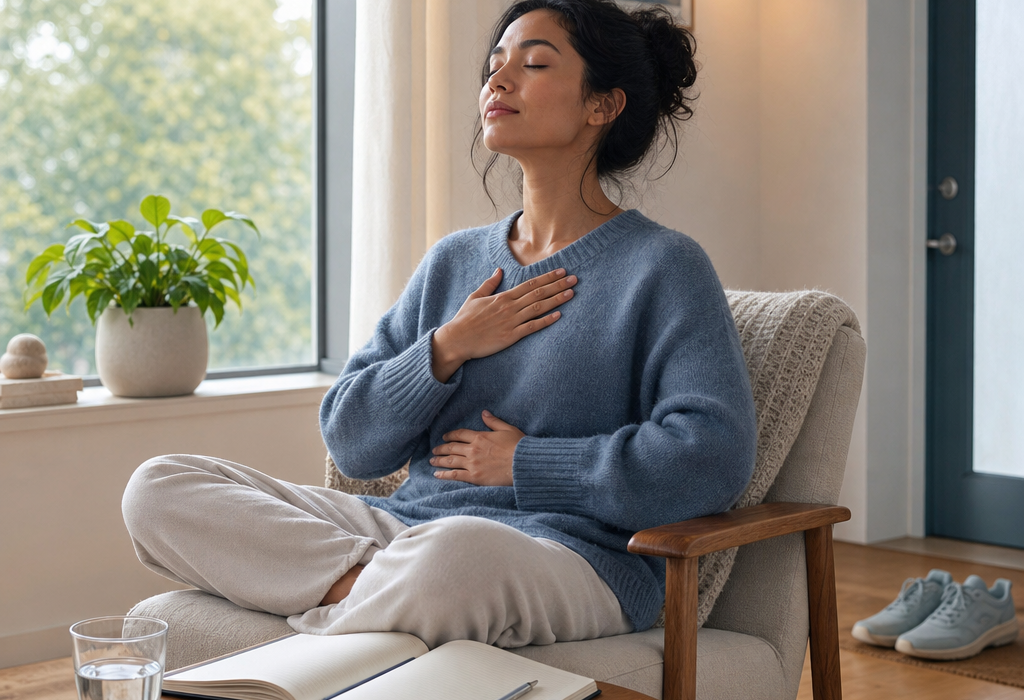
Stress can make your body feel tense, your mind feel crowded, and your breathing feel shallow without you even noticing. One of the simplest ways to calm that response is through breathwork for stress relief. By intentionally changing the way you breathe, you can help your nervous system shift out of “fight or flight” and into a more relaxed state.
Breathwork is not about forcing deep breaths or “just relaxing.” It is a practical skill that helps you slow down, reduce tension, and regain control when stress starts to build. Whether you feel overwhelmed at work, anxious before sleep, or physically tight during a busy day, breathwork can be a quick and effective reset. If you want a broader overview of breathing methods, you can also explore breathing exercises for stress relief.
Table of Contents
What Is Breathwork?
Breathwork for Stress Relief is the practice of using conscious breathing techniques to influence how you feel physically and mentally. Instead of breathing automatically, you guide your breath in a specific pattern to support relaxation, focus, or energy.
For stress relief, breathwork usually emphasizes:
– Slower breathing
– Longer exhalations
– Gentle, steady rhythm
– Nasal breathing when possible
These patterns can help activate the parasympathetic nervous system, which is responsible for rest, recovery, and calm.
How Breathwork Helps Reduce Stress
When you’re stressed, your breathing often becomes faster, shorter, and higher in the chest. This can send signals to your body that danger is present, which keeps stress levels elevated.
Breathwork helps by:
– Slowing the heart rate
– Reducing muscle tension
– Supporting better oxygen and carbon dioxide balance
– Lowering feelings of anxiety and overwhelm
– Improving body awareness
– Helping you pause before reacting
In simple terms, your breath can affect your state of mind, and your state of mind can affect your breath. That connection makes breathwork for stress relief one of the most accessible stress management tools available.
Research on slow breathing and relaxation practices has also been discussed by health organizations such as the National Center for Complementary and Integrative Health, which notes that mind-body approaches may help people manage stress.
Best Breathwork Techniques for Stress Relief
If your goal is to breathe better today, start with techniques that are easy, safe, and effective. The best results usually come from simple routines you can repeat regularly.
1. Box Breathing
Box breathing is a structured pattern often used to reduce stress and improve focus.
How to do it:
1. Inhale through your nose for 4 counts
2. Hold for 4 counts
3. Exhale for 4 counts
4. Hold for 4 counts
5. Repeat for 4 to 6 rounds
Why it helps:
Box breathing creates a steady rhythm that can calm racing thoughts and bring attention back to the present moment. It is one of the most reliable ways to begin breathwork for stress relief when you need a quick reset.
2. 4-6 Breathing
This is one of the simplest breathwork exercises for stress relief.
How to do it:
1. Inhale gently for 4 counts
2. Exhale slowly for 6 counts
3. Continue for several minutes
Why it helps:
A longer exhale encourages relaxation and can help reduce the intensity of stress responses. If you are new to breathwork, this is an easy place to start.
3. Diaphragmatic Breathing
Also called belly breathing, this technique helps you breathe more fully and efficiently.
How to do it:
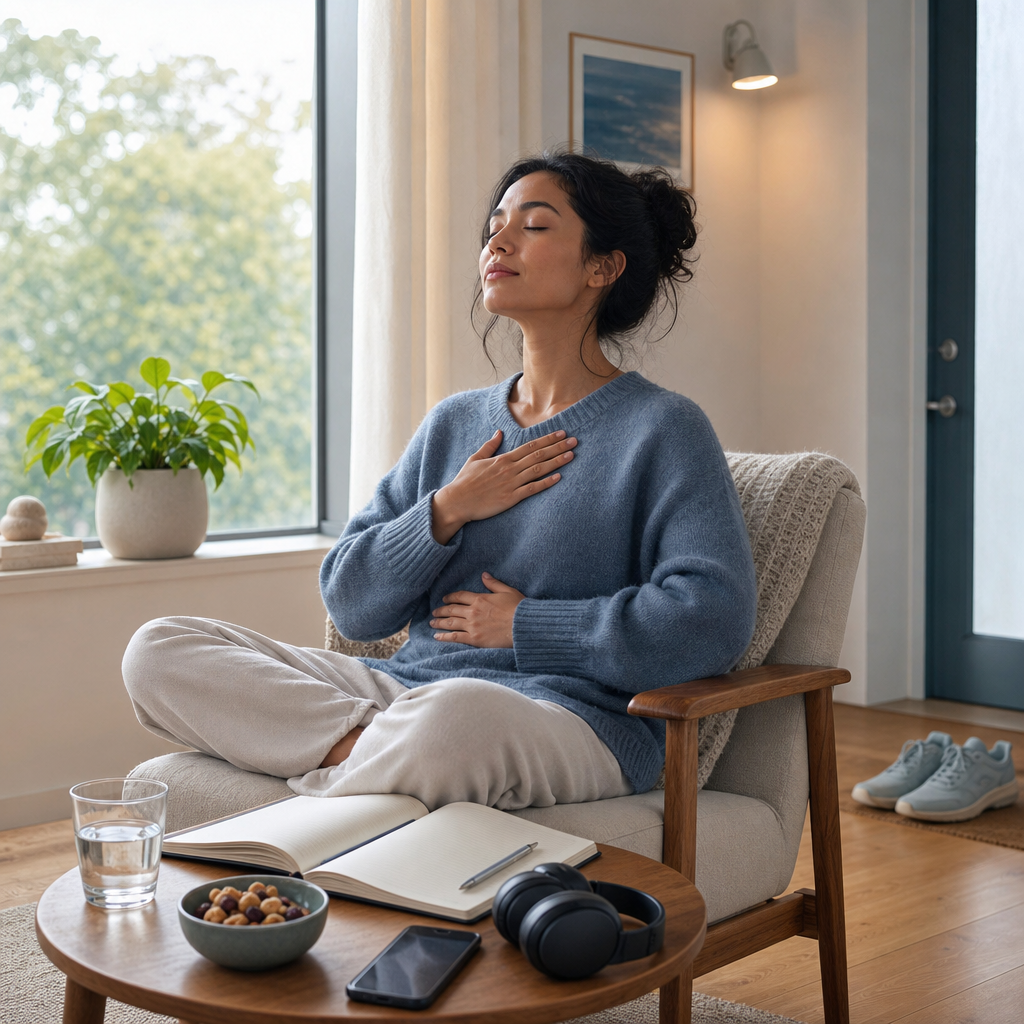
1. Place one hand on your chest and one on your belly
2. Inhale through your nose so your belly expands
3. Exhale slowly and let your belly soften
4. Keep your chest as still as possible
Why it helps:
Many stressed people breathe too shallowly. Diaphragmatic breathing helps shift breathing lower into the body, which often feels calmer and more natural. It also supports a more relaxed rhythm during breathwork for stress relief.
4. Resonant Breathing
This method uses a slow, even pace that supports balance in the nervous system.
How to do it:
– Inhale for about 5 seconds
– Exhale for about 5 seconds
– Continue for 5 to 10 minutes
Why it helps:
A consistent rhythm can help create a sense of stability and reduce physical stress symptoms. Many people find this pattern especially useful before work, during a break, or before sleep.
5. Physiological Sigh
This is a quick technique for moments of high stress.
How to do it:
1. Inhale through your nose
2. Take a second short inhale at the top
3. Exhale slowly through the mouth
4. Repeat 2 to 5 times
Why it helps:
This technique can help release built-up tension fast and is useful when you feel suddenly overwhelmed. It can be especially helpful if stress rises during a meeting, commute, or difficult conversation.
6. Alternate Nostril Breathing
This classic technique is often used to support balance and calm.
How to do it:
1. Sit comfortably with your spine upright
2. Close your right nostril and inhale through the left
3. Close the left nostril and exhale through the right
4. Inhale through the right nostril
5. Switch again and continue for several rounds
Why it helps:
The pattern can feel grounding and steady, especially when your thoughts are scattered. Some people prefer it as part of a longer evening relaxation routine.
7. Extended Exhale Breathing
This technique is simple, subtle, and easy to use anywhere.
How to do it:
1. Inhale gently through the nose
2. Exhale a little longer than the inhale
3. Keep the breath smooth and quiet
4. Repeat for 2 to 5 minutes
Why it helps:
Extending the exhale tells the body that it is safe to settle. For many people, this is one of the most practical forms of breathwork for stress relief because it does not require special timing or a quiet room.
How to Start Breathwork Today
You do not need experience, equipment, or a large time commitment. Start small and focus on consistency.
Try this simple routine:
– Find a quiet place if possible
– Sit or lie down comfortably
– Relax your shoulders and jaw
– Breathe through your nose if comfortable
– Use one technique for 3 to 5 minutes
– Notice how your body feels before and after
The goal is not perfect breathing. The goal is to create enough calm to interrupt the stress loop. When people stick with breathwork for stress relief, they often notice the biggest benefits when they practice before stress peaks rather than after it becomes overwhelming.
How to Build a Simple Daily Practice
A short routine can make breathwork feel easier to remember. You might practice when you wake up, before lunch, after work, or right before bed.
One simple plan is to use 4-6 breathing for two minutes in the morning, box breathing during a midday reset, and extended exhale breathing at night. If you prefer structure, link your session to an existing habit like brushing your teeth, making tea, or closing your laptop.
You can also keep a brief note of how you feel before and after each session. That small habit often makes the benefits easier to notice and encourages consistency.
When to Use Breathwork for Stress Relief
Breathwork can be helpful at many points during the day, including:
– Before a stressful meeting
– After receiving bad news
– During a commute
– When you feel tension in your body
– Before bed
– After too much screen time
– During moments of anxiety or overwhelm
It can also be used preventively. A few minutes of breathwork for stress relief each day may help you build resilience over time, so stress feels less intense when it shows up.
What to Expect During Practice
When you first begin, you may notice your mind wandering or your body resisting the pause. That is normal. Breathwork is a skill, and like any skill, it can feel awkward at first.
Some people feel calmer right away. Others notice subtle changes such as looser shoulders, a slower pulse, or a quieter mind after several sessions. The effect is often gentle rather than dramatic, especially when the technique is new.
If your breathing feels uncomfortable, shorten the practice and return to a natural rhythm. A gentle, repeatable approach usually works better than pushing too hard.
Common Questions About Breathwork for Stress Relief
Is breathwork the same as meditation?
Not exactly. Breathwork uses breathing patterns as the main practice, while meditation may include breath awareness, visualization, or mindfulness. Breathwork can be part of meditation, but it does not have to be.
How long does it take for breathwork to work?
Some people feel calmer within a minute or two. For others, the effects build with regular practice. Even a short session can help reduce tension in the moment.
Can breathwork help anxiety?
Breathwork may help ease anxious feelings by slowing the breath and signaling safety to the nervous system. It is not a cure, but it can be a useful tool for managing symptoms.
Should I breathe through my nose or mouth?
Nasal breathing is often preferred for relaxation because it naturally slows the breath. However, some techniques use mouth exhalations for comfort or release. Choose what feels best and most sustainable.
What if breathwork makes me feel lightheaded?
That can happen if you breathe too deeply or too quickly. If you feel dizzy, return to normal breathing, slow down, and stop the exercise. Gentle breathing is usually more effective for stress relief than intense breathing patterns.
Can I do breathwork at work?
Yes. Many methods are quiet enough to use at a desk, in a car before you get out, or during a short break. Simple patterns like extended exhale breathing or box breathing are often easy to practice without drawing attention.
Tips for Better Results
To get the most from breathwork, keep these tips in mind:
– Practice regularly, not just during crises
– Keep the breath smooth and gentle
– Focus on longer exhalations
– Relax your shoulders, jaw, and hands
– Use breathwork as a reset, not a performance
– Pair it with stretching, walking, or quiet time if helpful
Small, consistent practice often works better than long, occasional sessions. If you already use breathing exercises in another part of your routine, adding them here can make breathwork for stress relief feel more natural and sustainable.
How Breathwork Fits with Other Relaxation Habits
Breathwork works well alongside other stress management habits. A short walk, a few minutes of stretching, less screen time before bed, or a calmer morning routine can all support the same goal.
If you are building a broader approach to relaxation, it may help to combine breathwork with other breathing-focused practices such as Breathing Exercises for Stress Relief. The right mix depends on your schedule, your stress level, and what feels easiest to repeat.
When Breathwork May Not Be Enough
Breathwork is a helpful stress relief tool, but it is not a replacement for medical or mental health care. If stress feels constant, severe, or is affecting your daily life, sleep, work, or relationships, it may be time to speak with a healthcare professional or therapist.
If you have a respiratory condition, chest pain, or another health concern, get medical guidance before trying more advanced breathing methods. Breathwork can support healing, but deeper stress patterns may need additional care.
Final Thoughts
Breathwork for Stress Relief is a simple, practical way to calm your body and mind when life feels overwhelming. By learning to slow and guide your breath, you can reduce tension, improve focus, and create more space between stress and your reaction to it.
Start with one technique today, even for just a few minutes. The more often you practice, the more natural it becomes to breathe better and feel better. Over time, breathwork for stress relief can become a reliable part of your daily routine, helping you return to calm more quickly when pressure builds.